Trail technique
How to improve your uphill trail running: power hiking, cadence, and VAM
When to run and when to hike, how to hold a sustainable effort on a long climb, and how to build climbing fitness week after week.
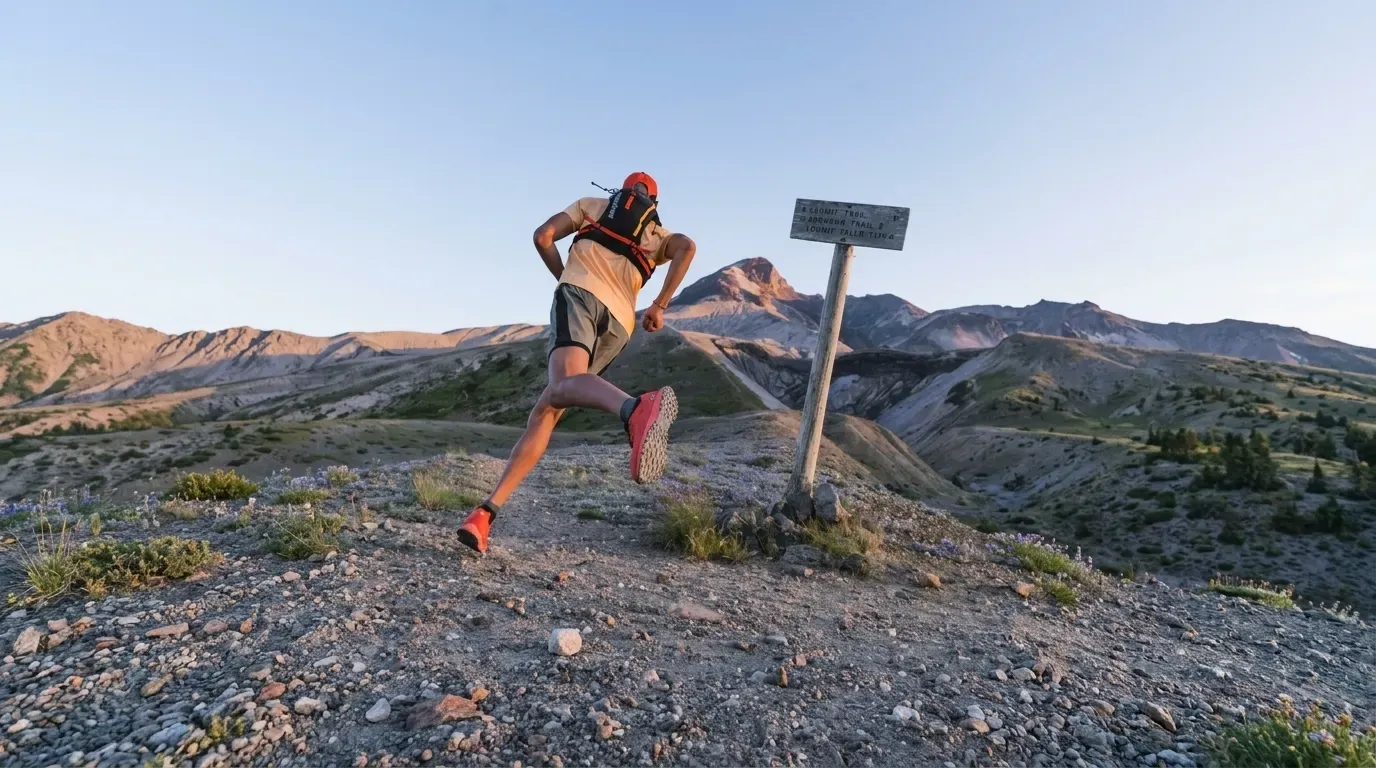
On a course with real elevation gain, most of the clock is spent going up. Climbs are where the field spreads out, where a race is won or lost, and where a good day can turn into a very long one. The good news is that climbing rewards method more than raw talent: choosing the right gait, holding a sustainable effort, and training vertical gain in small regular doses will take you further than attacking every slope.
Why climbs decide your race
Distance alone says very little about a trail course. A climb cuts your speed, raises your heart rate, and takes a disproportionate share of the total time. On a route with 1,000 m of elevation gain, the ascents can easily account for half the finishing time even though they represent a small part of the distance.
Every metre of elevation gain costs mechanical work, and that cost stays roughly the same whether you run it or walk it. What changes is how fast you pay it and how much it drains you. That is why elevation gain, not kilometres, is the useful unit for pacing your effort and planning your training.
Running or hiking: choose the efficient option
Above a certain gradient, running stops being worth it. Running and fast hiking end up costing a similar amount of energy for a similar speed, but hiking keeps the heart rate lower and spares the calves and hip flexors. For many trail runners that crossover sits somewhere between 15 and 25 per cent, depending on fitness, fatigue, and terrain.
Hiking is not giving up. In a long race, the runner who hikes the steep sections calmly and runs the runnable ones often finishes ahead of the one who jogs everything and blows up. Find your own crossover point in training: run a climb one week, hike the same climb the next, then compare the time and the effort.
Power hiking is a skill, not a fallback
Place your hands or forearms on your thighs just above the knee and push through each step. Part of the work moves to the upper body and takes load off the legs. Keep the chest open, look a few metres ahead, and roll through the whole foot instead of staying on your toes.
Take short, regular steps at a rhythm you could hold for twenty minutes. Poles, where they are allowed, are a real advantage on long climbs, but they need practice: planted badly, they cost more than they save. Train hiking for its own sake, or you will discover on race day that it is harder than it looks.
When you run: shorten the stride, keep the cadence
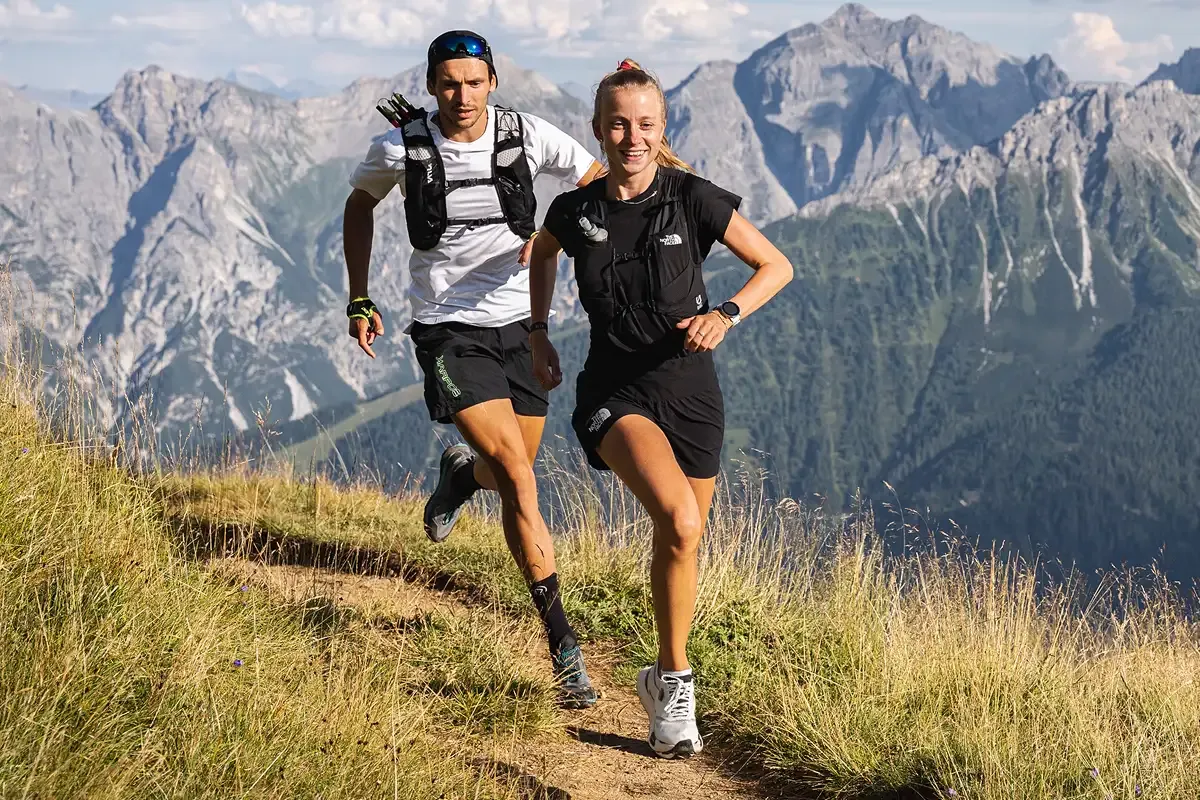
On a runnable slope, shorten your stride instead of pushing harder. Land with the foot under your hips, let the ankles lean you into the hill, and avoid folding at the waist, which closes the chest and shortens your breathing.
Keep the arms relaxed and driving forward rather than across the body. Cadence should stay close to what it is on the flat even though the stride is much shorter. If your breathing falls apart and your steps get longer and slower, the slope has won: switch to hiking before you go too deep.
Manage effort, not pace
Pace per kilometre stops meaning much on a climb: 9 min/km at 5 per cent and 9 min/km at 18 per cent are two completely different efforts. Heart rate helps, but it drifts with heat and fatigue, and it often takes a minute or more to reflect the start of a climb.
Vertical speed, or VAM, is a more stable benchmark: it counts how many metres of elevation gain you climb in one hour. Knowing that you hold 800 m/h on a long climb when fresh, and 600 m/h late in a race, gives you something concrete to pace against. Always combine it with perceived effort and with your ability to speak in short sentences.
Build your climbing legs gradually
Elevation gain follows the same rule as mileage: it goes up progressively. Track your weekly gain and add roughly ten per cent at a time rather than doubling it after a motivating weekend. One climbing-focused session per week is enough for most runners, alongside easy running.
If you live on flat ground, repeated short hills, stairs, or a treadmill at a steep incline still develop the specific strength and the hiking rhythm. Add strength work for the hips and calves, and remember that a climb done on tired legs teaches pacing but adds little fitness.
A simple session to improve your climbing
- 1 Warm up for 15 to 20 minutes on easy, rolling terrain.
- 2 Complete 5 to 8 climbs of 2 to 3 minutes on a steady slope of 8 to 15 per cent.
- 3 Run some repetitions and power hike the others, then compare the time and the effort.
- 4 Come back down easily, walking or jogging, and recover fully between repetitions.
- 5 Add one repetition or one minute per week, never both at the same time.
Know what your climbs really cost
Use the TrailRun VAM calculator to turn any climb into a clear benchmark: vertical speed, average grade, climb pace, and time per 100 m of elevation gain.
Open the calculator