Race guide
EcoTrail Paris 80 km: 81.8 km and 1,300 m of climbing from Élancourt to the Eiffel Tower. Map, profile, cut-off times, pacing calculator and training plan.

- distance
- 81.8 km
- elevation gain
- 1,300 m
- km-effort
- 95
- time limit
- 13h15
The course
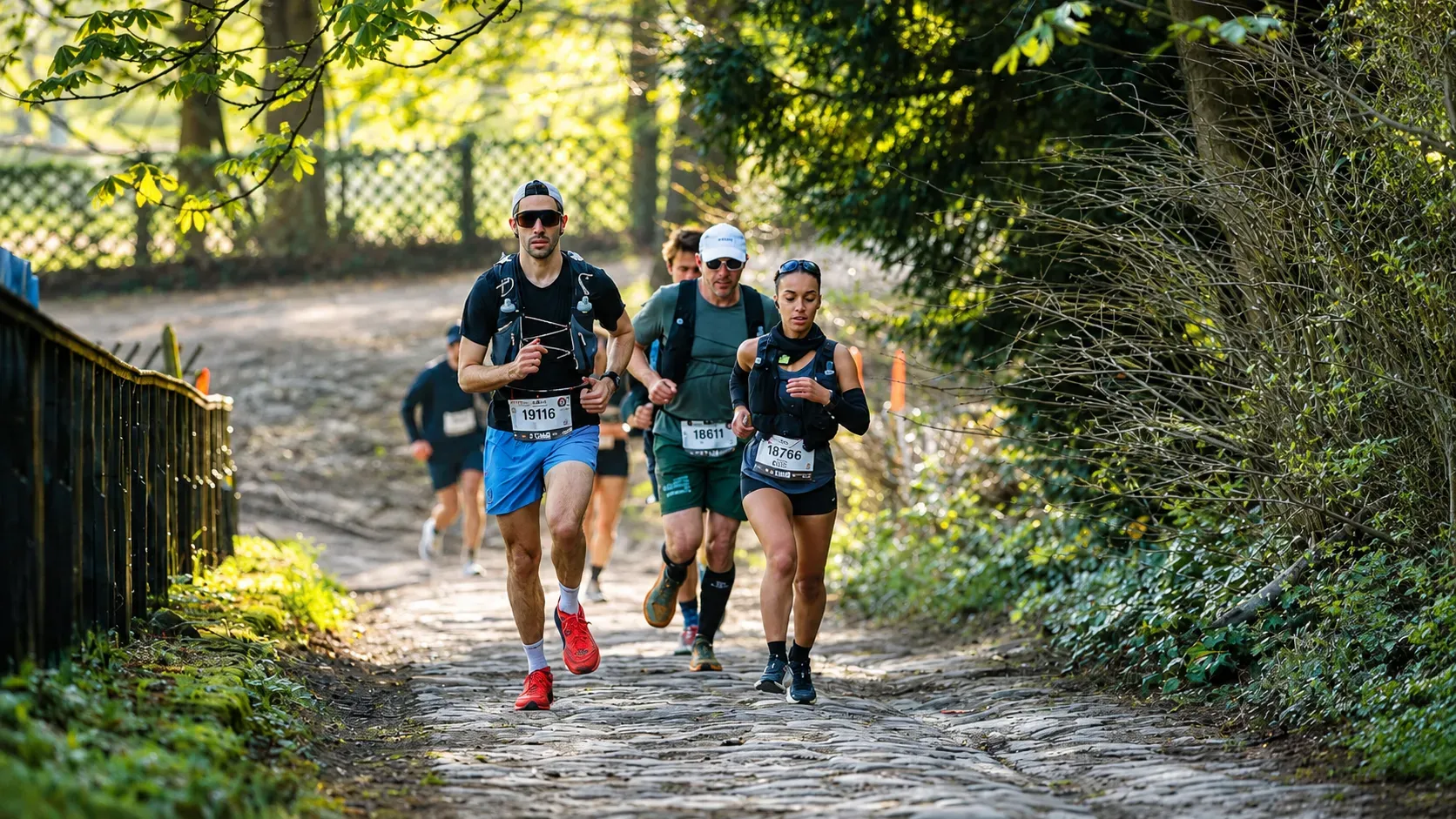
The 80 km is the historic distance of the EcoTrail Paris, run since 2008. It starts from the Colline d'Élancourt in the Yvelines, crosses the forests and great estates west of Paris (Buc, Chaville, Meudon, the Domaine national de Saint-Cloud), reaches the Seine via the Île aux Cygnes and finishes on the first floor of the Eiffel Tower. 92% of the course is on unpaved paths.
The map, the profile and the cut-offs come from the March 2026 edition, published by the race's timing provider; profile altitudes are calculated from terrain data. The 2027 edition, on Saturday 20 March, keeps the same start and finish: the organiser will publish the official track as the race approaches.
Loading the map…
Elevation profile
Official GPX track · OSE- Descent (< −5%)
- Flat (−5 to 5%)
- Climb (5 to 15%)
- Steep climb (> 15%)
Hover over the profile to read the altitude and gradient at each kilometre.
Checkpoints and cut-off times
The 8 checkpoints of the 2026 edition: kilometre, altitude, cumulative elevation gain, cut-off time and services, as published by the organiser.
| Checkpoint | Km | Altitude | Cum. gain | Cut-off | Services |
|---|---|---|---|---|---|
| Colline d'Élancourt | 0.0 | 171 m | 0 m | Start · Sat 10:55 | |
| Buc – Château | 25.1 | 153 m | 288 m | Sat 14:35 | |
| Chaville – Stade Jean-Jaurès | 37.7 | 104 m | 525 m | Sat 16:40 | |
| Meudon – Saint-Philippe | 47.8 | 148 m | 764 m | Sat 18:30 | |
| Meudon – Marcel Bec | 53.6 | 166 m | 876 m | Sat 19:45 | |
| Saint-Cloud – Manufacture | 72.4 | 27 m | 1,190 m | Sat 22:30 | |
| Île aux Cygnes | 79.8 | 29 m | 1,249 m | – | |
| Tour Eiffel – 1er étage | 81.8 | 68 m | 1,299 m | Sun 00:10 |
Timing points and cut-offs of the 2026 edition (official LiveTrail timing). According to the rules, cut-offs apply on entering the aid station zones; the detailed list of aid stations is in the roadbook sent to registered runners.
What level do you need for the EcoTrail Paris 80 km?
With 81.8 km and 1,300 m of climbing, the EcoTrail is about 95 km-effort, to be completed within 13h15. The rules strongly advise having already finished a 45 km trail race: the climbing is modest, but you need to be able to run for a long time and finish in the dark.
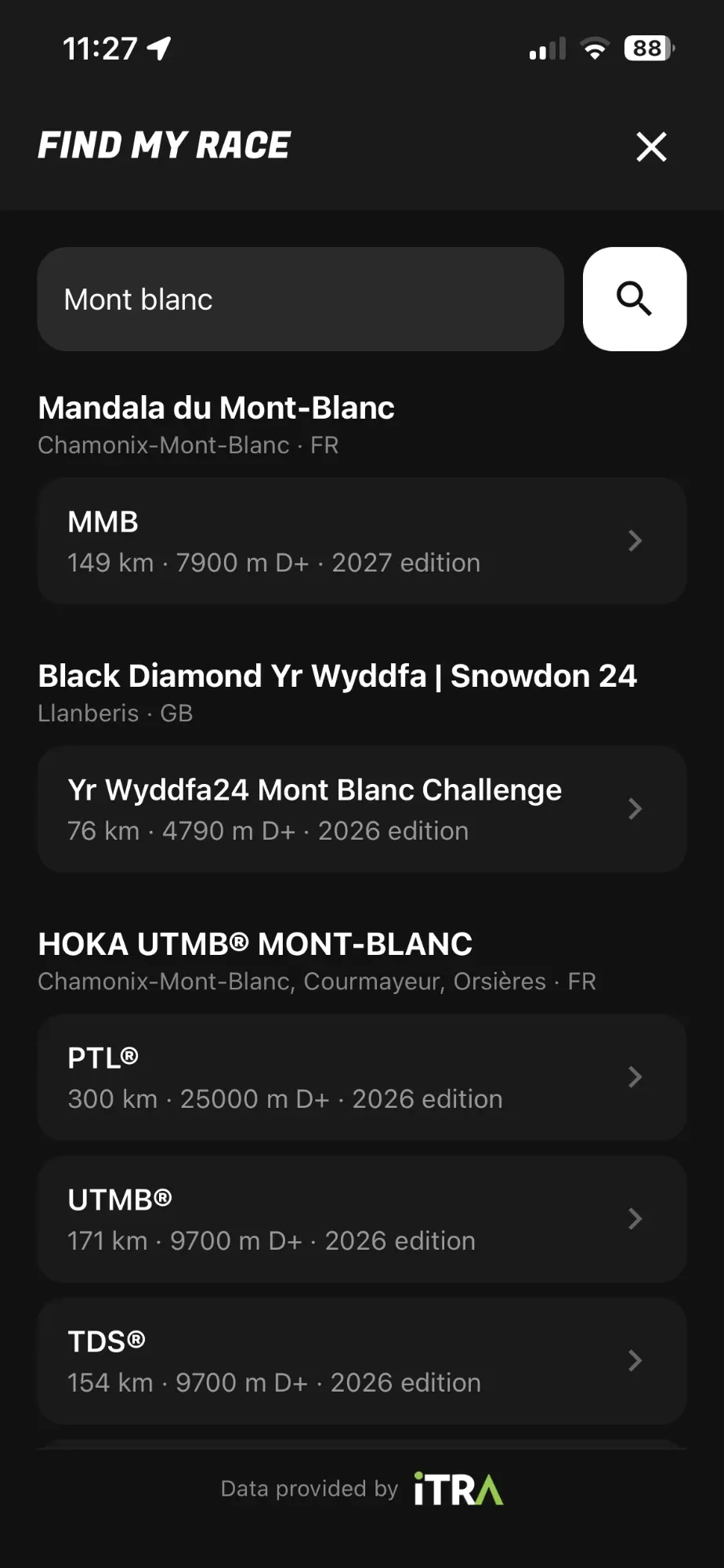
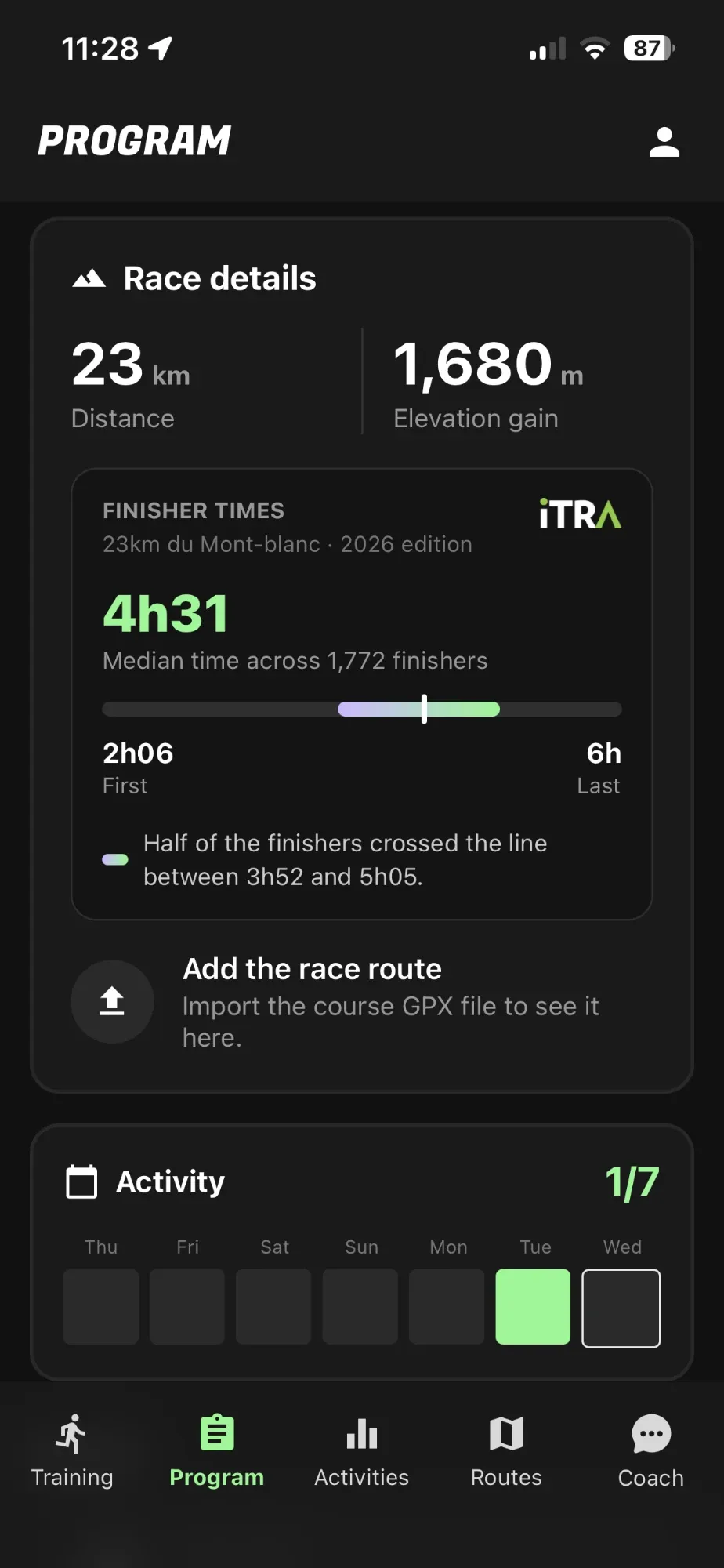
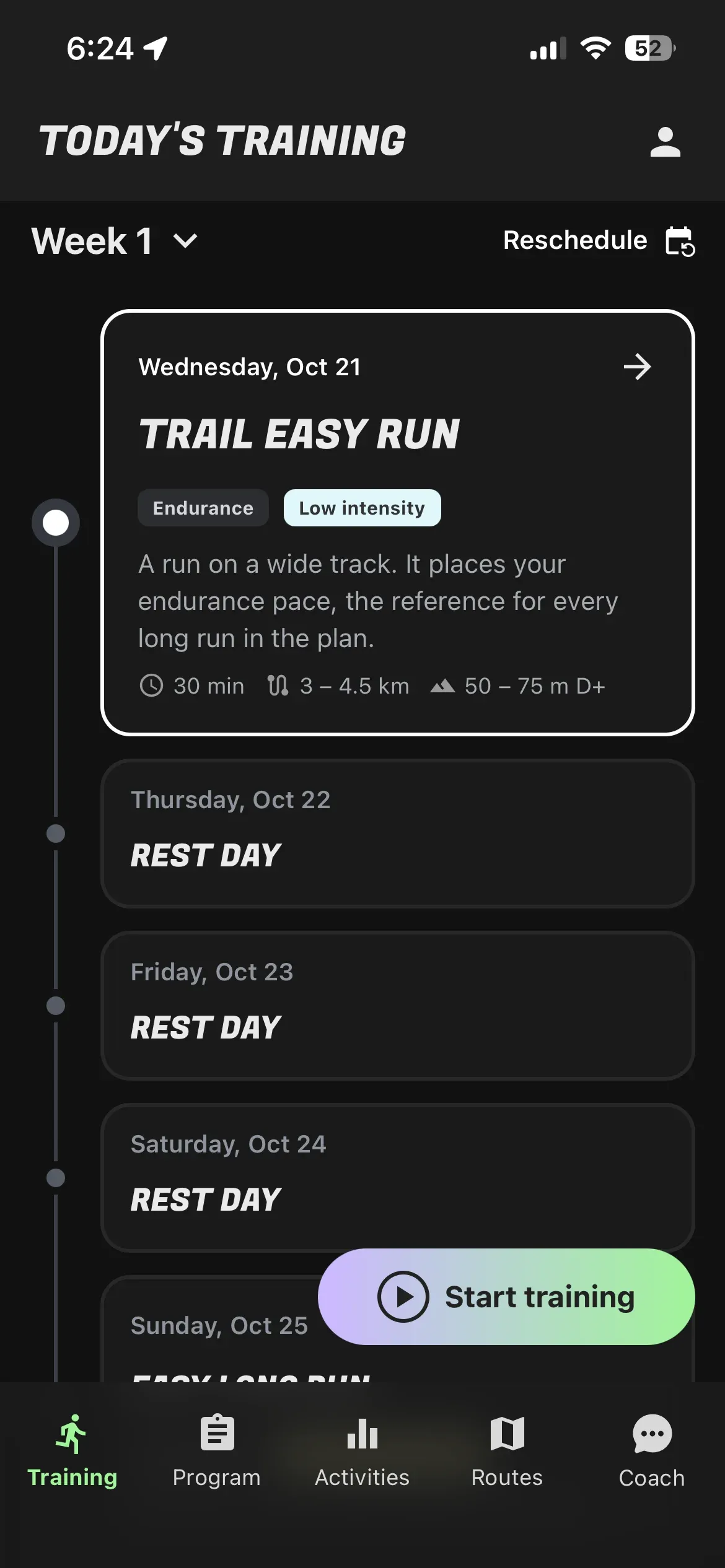
Plan 16 to 20 weeks of specific training. In TrailRun, search for the EcoTrail Paris among the races listed by ITRA and make it your program goal: the plan is built backwards from race day.
How do you train for such a runnable ultra?
At the EcoTrail you hardly walk: 1,300 m of climbing spread over 82 km means mostly short forest rises that you keep running over. The time limit requires an average of 7.2 km-effort per hour from start to finish, a continuous running pace, even after 60 km. Poles are forbidden, on pain of disqualification.
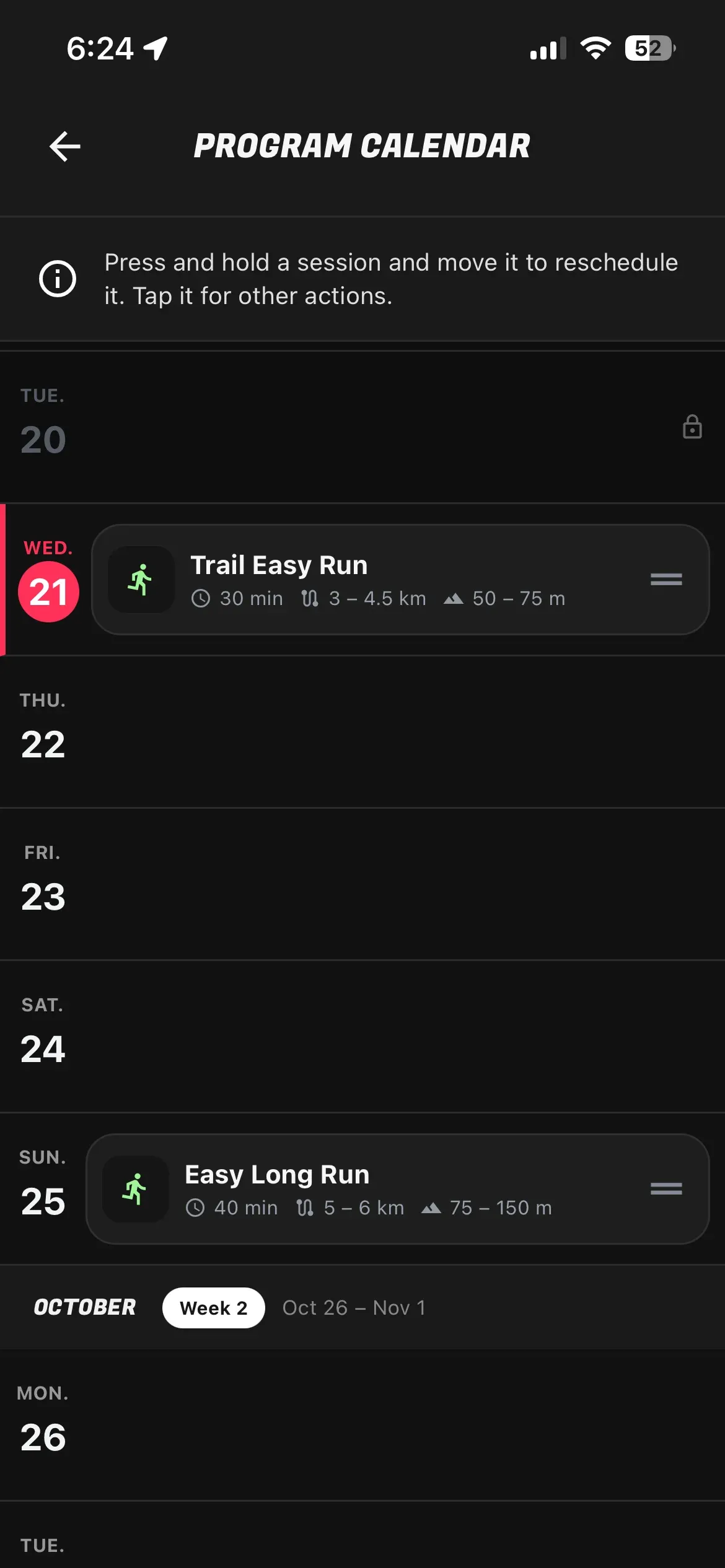
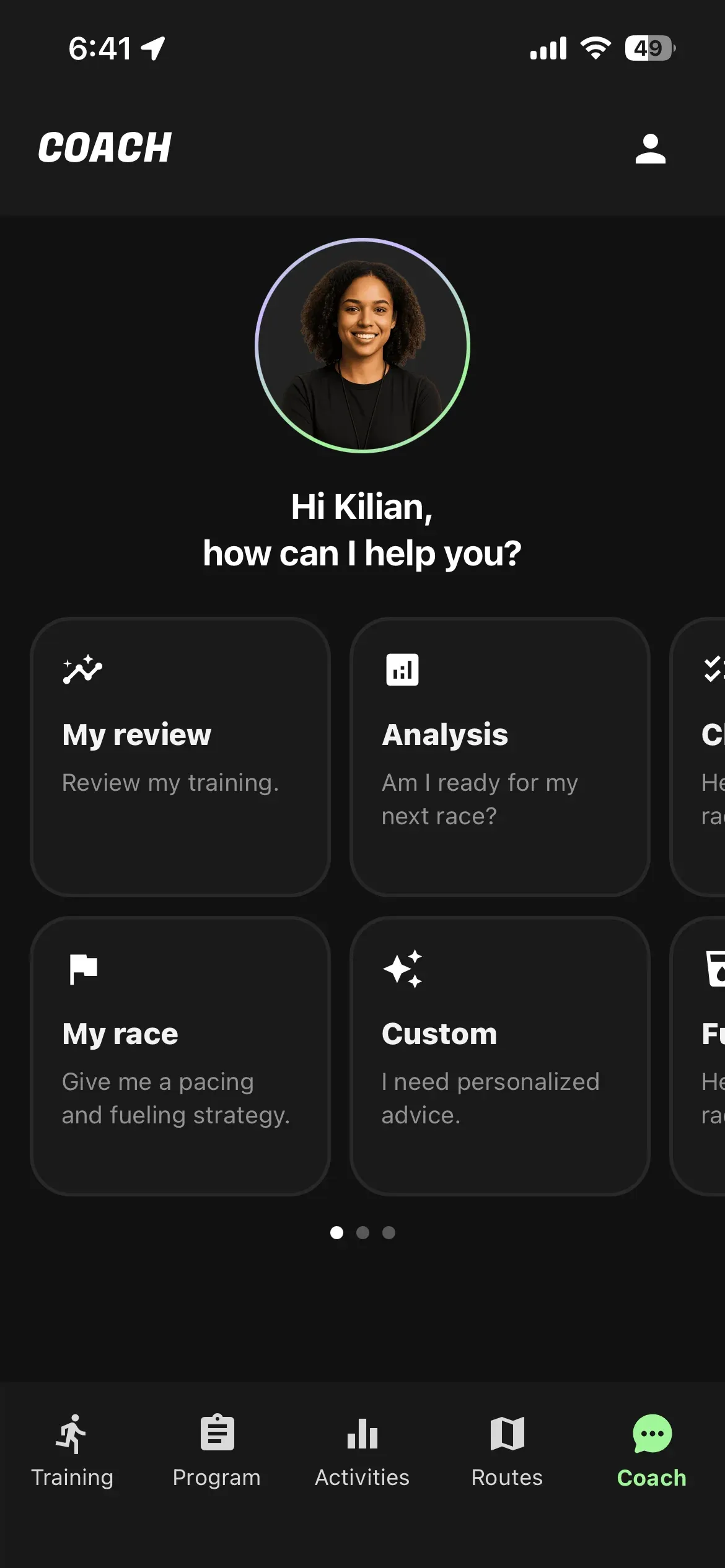
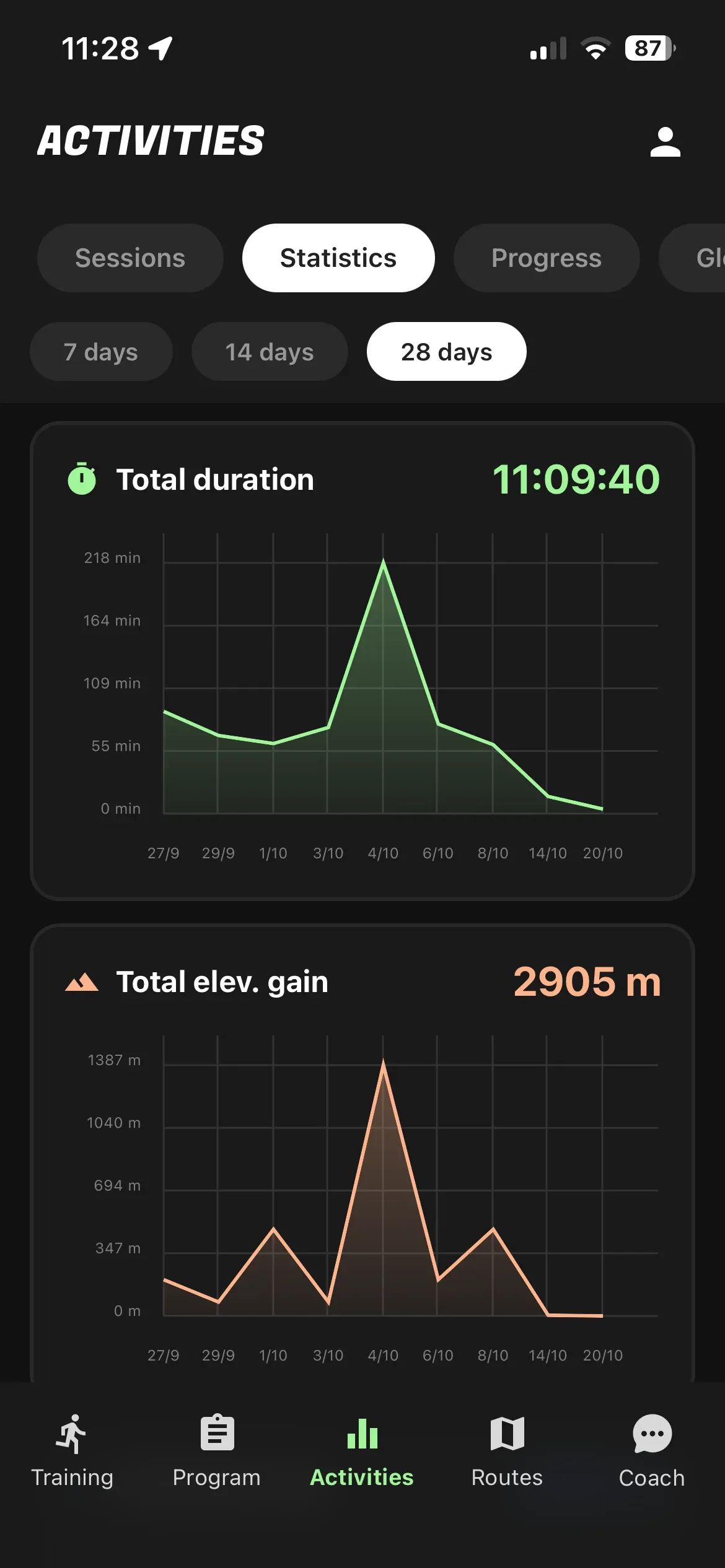
Build your endurance with long runs at a steady pace on trails, threshold work to make your race pace comfortable and strings of short hills to handle the constant changes of rhythm. Get used to muddy paths too: in March, the forests west of Paris can be muddy. The TrailRun ultra-trail plan organises these blocks over 16 to 24 weeks.
How do you beat the EcoTrail cut-off times?
The race starts in waves between 10:30 and 10:55 am, and the cut-offs are the same for everyone. In 2026: Buc at 2:35 pm (km 25.1), Chaville at 4:40 pm, Meudon Saint-Philippe at 6:30 pm, Meudon Marcel Bec at 7:45 pm, Saint-Cloud at 10:30 pm (km 72.4) and the finish at 12:10 am, 13h15 after the last wave. Cut-offs apply on entering the aid station zones.
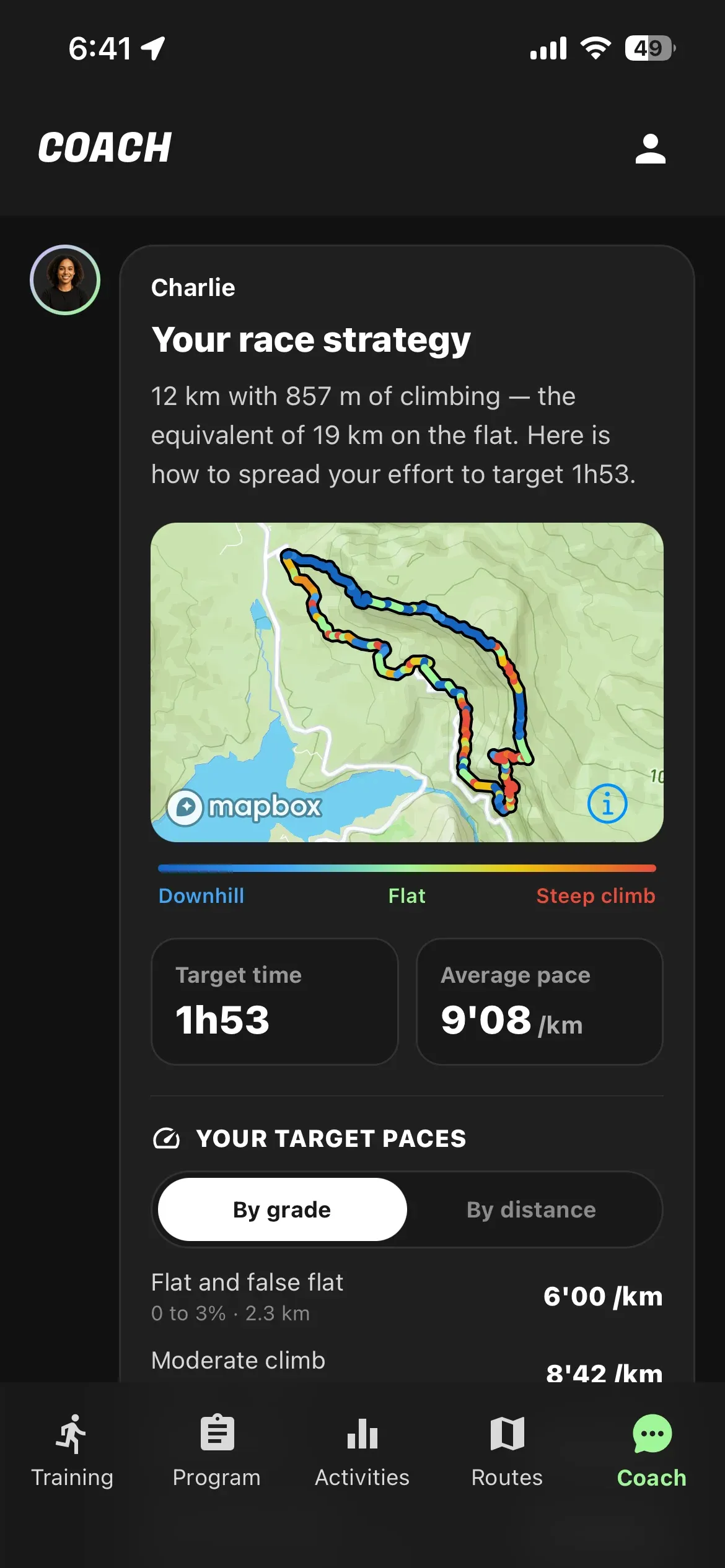
For the last wave, the first cut-off is the tightest: reaching Buc in time takes about 7.6 km-effort per hour, against 7.2 on average. After that the margin stays small all the way to the finish: there is no section to make up time. The calculator below includes these times with a 10:55 am start: enter your target time to see your margin at each checkpoint, then plan your strategy with the app's coach.
How do you handle the night, the weather and the kit?
With a late-morning start, many runners finish in the dark: in late March, the sun sets around 7 pm. A headlamp with spare batteries and a reflective armband are part of the mandatory kit, along with a 1.5-litre water reserve, a food reserve, a cup, a survival blanket, a phone, ID and a means of payment.
The race is semi-self-supported: no cups are handed out at the aid stations and personal crew support is only allowed in the designated zones. The roadbook sent to registered runners gives the exact list of aid stations; carry enough to get from one to the next, as March evenings are cool and sometimes damp.
Your pacing plan
The 6 cut-off points of the 2026 edition are already filled in, with a start in the last wave, at 10:55 am. Enter your target time, for example 11:00, and your average stop at each aid station: the calculator spreads your time according to the km-effort of each section and shows your margin at every cut-off. If you start in an earlier wave, change the start time.
Your pacing plan
Total distance
- km
Total gain
- m
Effort distance
- km
Finish time
-
Smallest margin
-
Slowest time the cut-offs allow
-
| Checkpoint | Km | Split | Race time | Arrival | Cut-off | Margin |
|---|---|---|---|---|---|---|
| Enter your sections and target time to see your pacing plan. | ||||||
Example: a 12 km section with 900 m of climbing counts as 21 effort km, so it takes almost twice as long as a runnable 12 km section.
This plan is a guide. Some races apply cut-offs when you leave the aid station rather than when you arrive: check your race rules and keep your stop time in mind.
Frequently asked questions
The essentials about the race, in a few answers.
81.8 km with 1,300 m of elevation gain, from the Colline d'Élancourt to the first floor of the Eiffel Tower, on 92% unpaved paths. That is about 95 km-effort (the distance plus one kilometre for every 100 m of climbing).
13h15 from the start. In 2026, the intermediate cut-offs were at Buc (2:35 pm), Chaville (4:40 pm), Meudon Saint-Philippe (6:30 pm), Meudon Marcel Bec (7:45 pm) and Saint-Cloud (10:30 pm), with the finish closing at 12:10 am. Each year's cut-offs are published in the roadbook.
Saturday 20 March 2027, with wave starts between 10:30 and 10:55 am from the Colline d'Élancourt. The race is limited to 3,000 starters.
No. The rules strictly forbid poles on every EcoTrail Paris race, on pain of disqualification.
A 1.5-litre water reserve, a food reserve, a cup of at least 15 cl, a headlamp with spare batteries, a reflective armband, a survival blanket, a charged phone, ID and a means of payment. A whistle, a cap and a waterproof jacket are very strongly recommended.
The rules strongly advise having already finished a 45 km trail race. Above all, you need to be able to run for a long time at a steady pace: the course is runnable and the time limit leaves little room for walking.
Sources
Distance, elevation, checkpoints, services and cut-off times: official 2026 data published by OSE. The map and the profile are drawn from the official course track.
TrailRun is not affiliated with OSE. Rules, course and cut-offs can change from one edition to the next: the official page prevails.
JOIN THE COMMUNITY
Join thousands of trail runners who train, progress, and share their passion every day. Download TrailRun and be part of the adventure.
Download on the App Store