Trail gear
Trail running gear: the complete training and race checklist
Shoes, pack, hydration, clothing, and safety: adapt your trail gear to the duration, weather, route, and race rules.
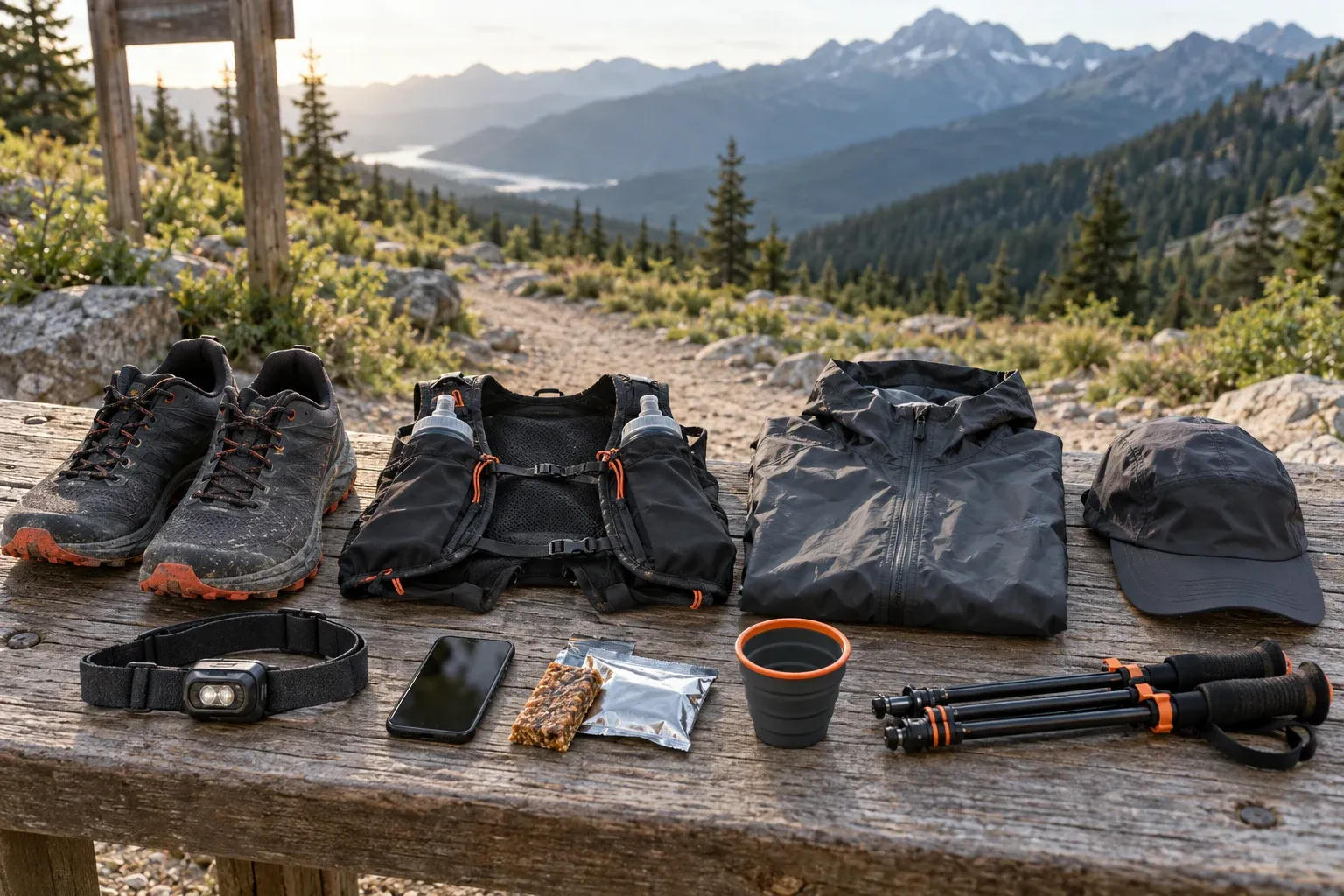
The best trail-running setup is not the one that fills the biggest pack. It is the one that matches the route, duration, weather, and level of self-sufficiency. A short local run and a mountain race demand different preparation. This checklist separates useful everyday gear from equipment required by race organizers, whose official rules always take priority.
Start with terrain, duration, and weather
Before packing, check distance, elevation, technical difficulty, water access, phone coverage, and the forecast. One hour on a busy loop is not the same as four hours on an exposed ridge. Add a margin when the route may take longer than planned.
Mountain conditions can change quickly. A light jacket, warm layer, or extra water may become essential even when the start feels comfortable. A race minimum never replaces your own judgement about the conditions.
Shoes, socks, and foot comfort
Choose shoes for the grip and technical demands of the route, with enough room at the front for descents. Deep lugs help in mud, while a versatile outsole suits dry, runnable trails. The most protective shoe is not automatically best if it changes your stride or creates rubbing.
Test socks, lacing, and anti-chafe protection during long runs. Never start a race in new shoes. Trim nails in advance and carry basic blister care when duration or remoteness makes it sensible.
Pack, water, and fueling
A well-fitted vest limits bounce and keeps flasks and food within reach. A belt or handheld bottle may be enough for a short run. As duration, heat, and self-sufficiency increase, your carrying capacity should include a genuine safety margin.
Plan water around refill opportunities and test fueling in training. A charged phone, reusable cup, familiar food, and a small emergency reserve on long runs are more useful than a pile of products you have never tried.
Clothing and weather protection
Dress in layers: a moisture-managing base, wind or rain protection, and a warm layer when needed. A cap, glasses, and sun protection complete a hot-weather kit; a hat and gloves take little space when cold conditions are possible.
A jacket sold as waterproof may not meet a race specification. Check the hood, seams, and any required performance rating. Test every garment while moving: a jacket that feels perfect at rest may restrict your arms, trap too much heat, or rub beneath the pack.
Safety, navigation, and night running
Carry a charged phone, save the route offline where coverage is uncertain, and tell someone your plan and expected return time. An emergency blanket, whistle, and small kit suited to the outing take little room. A GPS watch helps, but should not be your only navigation option.
At night, use a headlamp you have already tested, with enough battery and a backup power source when the duration requires it. A rear light or reflective element helps on road sections. Poles can support long climbs if you know how to use them and the rules allow them.
Mandatory gear is specific to each race
Organizers may require a pack, minimum water reserve, phone, jacket, emergency blanket, reusable cup, or warm clothing. Hot-weather or bad-weather kits can be activated shortly before the start. A list from another event is never enough.
Read the official regulations, inspect every item several days before the race, and use it in training. On race day, everything should be accessible and familiar. The best test is a specific run with the pack loaded exactly as it will be during the event.
Essential checklist before you leave
- 1 Shoes, socks, and clothing already tested during a long run.
- 2 Water and food matched to duration, heat, and refill points.
- 3 Charged phone, offline route, and someone informed of your plan.
- 4 Rain, cold, or sun protection matched to the forecast and exposure.
- 5 Headlamp, emergency blanket, whistle, and safety items for the time and remoteness.
- 6 Official race list checked once more before closing the pack.
Prepare the run, then focus on the trail
TrailRun helps you structure training, create routes, and send sessions to your watch so you can start with a clear objective.
Discover TrailRun