Trail preparation
How to estimate your trail race time
Why 30 km on trails is not the same as 30 km on road, and how to build a realistic estimate with elevation gain, effort distance, pace, and terrain difficulty.
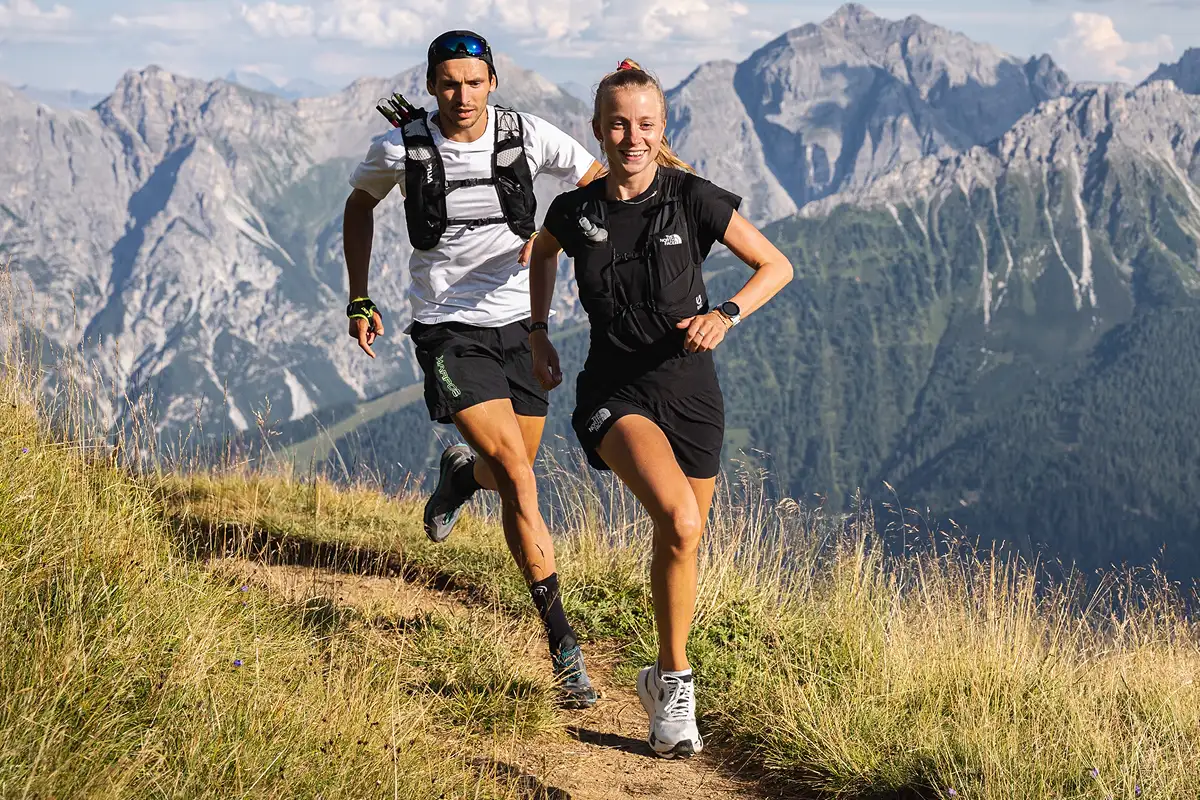
Estimating a trail race time is never as simple as estimating a road race. Distance matters, of course, but elevation gain, technical terrain, descents, weather, altitude, and fueling can completely change the effort. The goal is not to predict your finish time to the minute, but to build a realistic benchmark for your race strategy.
Why trail running is harder to predict than road running
On the road, you can often start from distance and average pace. In trail running, that logic reaches its limit quickly: two 30 km races can feel completely different if one has 400 m of elevation gain on runnable paths and the other has 2000 m on technical trails.
Trail running adds several layers: climbs slow pace, descents load the quads, repeated accelerations break rhythm, and terrain demands more attention. That is why a useful estimate needs to look beyond distance alone.
The base: convert elevation gain into effort distance
A simple field rule used by many runners is to add about 1 km of effort for every 100 m of elevation gain. It is not a perfect law, but it is very useful for comparing routes.
The starting formula is: real distance + elevation gain / 100. For example, 42 km with 2500 m of elevation gain gives 42 + 25 = 67 km-effort. This immediately shows why that kind of race is not prepared like a flat marathon.
Add terrain difficulty
Effort distance gives a base, but it does not say everything. Singletrack with rocks, roots, mud, or harsh descents costs more than a runnable forest road. Technical terrain slows pace and increases muscular fatigue.
In practice, you can add a margin depending on the terrain: smaller on runnable routes, larger on technical courses. That is what a good estimate should do: give a baseline, then adjust it to the actual terrain.
Use your flat pace as a starting point
To estimate a finish time, choose a reference flat pace you could sustain for a long time, not your 5K personal best. If your starting pace is too ambitious, the whole estimate will be too optimistic.
Then multiply that pace by the effort distance and add the terrain effect. If your comfortable pace is 6:00/km and the course represents 67 km-effort, you already get about 6 h 42 before adjusting for technical difficulty.
Concrete example
Take a 42 km race with 2500 m of elevation gain. The effort distance is 67 km. With a 6:00/km reference pace on flat ground, that gives 402 minutes, or 6 h 42.
If the terrain is moderate and adds about 8% difficulty, the estimate rises to around 7 h 14. It is not a guaranteed finish time, but it is far more realistic than reasoning from the 42 km alone.
Details that can change your finish time
Weather, heat, altitude, sleep, fueling, bottlenecks early in the race, and your ability to descend efficiently can all change the final result. Two runners with the same road level can finish very differently on trails.
The right approach is to build an estimate, then keep margin. In trail running, a solid and adaptable plan is usually better than an overly precise target that breaks at the first surprise.
A simple 4-step method
- 1 Calculate effort distance: distance + elevation gain / 100.
- 2 Choose a realistic reference pace on flat ground.
- 3 Add a margin depending on terrain difficulty.
- 4 Adjust for weather, fueling, altitude, and current fitness.
Estimate your trail race time
Use the TrailRun race time calculator to turn distance, elevation gain, and terrain difficulty into a simple estimate.
Open the calculator